 Loading... Please wait...

Posted on 4th Sep 2015
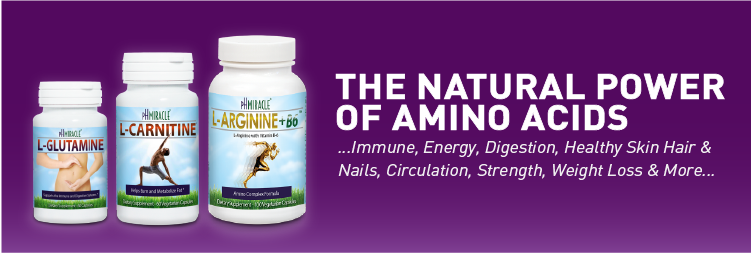
Amino acids are completely natural micronutrients, which have very significant benefits - without side effects. They are the basic building blocks of the body and are also sources of energy, like fats and carbohydrates. However, amino acids are structurally characterized by the fact that they contain nitrogen (N), whereas fats and carbohydrates do not. Therefore, only amino acids are capable of forming tissues, organs, muscles, skin and hair.
The importance of amino acids as the precursors of enzymes and neurotransmitters is often underestimated. As such, amino acids regulate almost all of the metabolic processes in the human body, and they are essential for a healthy body.
L-CARNITINE
WHY YOU NEED IT
L-carnitine is synthesised from the amino acids lysine and methionine (essential amino acids which cannot be synthesized (“made”) in the body), and it performs essential functions in human metabolism. The naturally occurring protein compound does this by acting as a receptor molecule for different fatty acids, and it therefore contributes towards providing an effective supply of nutrients and energy generation in the body.
The importance of L-carnitine is particularly clear in the transport of fatty acids. Long-chain fatty acids are only able to be transported into the mitochondria, which generate energy in the cells of the body, with the help of L-carnitine. Therefore carnitine is particularly well known as a fat burner.
VERY LITTLE L-CARNITINE IN VEGETARIAN FOOD
The human body mostly receives its supply of L-carnitine from red meat, dairy products and mushrooms. Because of this, in a mixed diet around 100 to 300 mg per day is taken into the body. Conversely fruit, vegetables and meat from poultry contain little or no L-carnitine. Therefore, people following a vegetarian or vegan diet receive only approximately 3 – 20% of the level received through a mixed diet, and this amount of L-carnitine is classed as being inadequate.
L-GLUTAMINE
WHY YOU NEED IT
If you do not have a large enough supply of L-glutamine in your body, it can lead to immune system weaknesses and problems in your digestive system due to infections, and it can affect your quality of life significantly.
Because L-glutamine also provides energy for the digestive cells, it aids those cells in their regeneration and renewal, therefore influencing the absorption ability of the intestine. Cells which divide quickly, such as those in the immune system, are very reliant on having a supply of L-glutamine. This is why medical procedures like bone marrow transplants have much lower death rates when a targeted supplementary regime of L-glutamine has been given beforehand.
Other uses of L-glutamine can be found in the nervous system, as L-glutamine is very chemically similar to the neurotransmitter glutamic acid. To transport messages in the body, the nerve cells must be stimulated successfully in a row. After this stimulation, the neurotransmitter has to be transported back to the earlier cell which previously released it in order to pass along the message. When back in the old cell, it is turned into L-glutamine so that it does not accidentally excite the next cell and send a false message. In this way, a second and unwanted excitement of the nerve cells can be avoided, and finally L-glutamine is turned back into glutamic acid for the cycle to start again when needed.
As L-glutamine also has a certain anti-oxidative potential, it can protect human cells from destruction by free radicals, and is therefore able to, up to a certain point at least, prevent degenerative neurological illnesses like Alzheimer’s or Parkinson’s.
VERY LITTLE L-GLUTAMINE IN VEGETARIAN FOOD
The human body mostly receives its supply of L-glutamine from cheese, milk, yogurt, soya, wheat and meat. Similar to L-Carnitine, fruit and vegetables contain little or no L-Glutamine. Therefore, people following a vegetarian or vegan diet should supplement with L-Glutamine.
L-GLUTAMINE & CANCER TREATMENT
In the past, several studies were carried out, showing L-glutamine’s effects against tumors. In their conclusions the researchers decided that appropriate L-glutamine supplementation can considerably improve the metabolism and entire clinical state of cancer patients without increasing tumor growth. This affects, among other things, an increase of the immune system’s activity, increased rate of cell renewal and a stronger creation of glutathione. Furthermore, L-glutamine can lower the risks of chemotherapy and radiotherapy, leading to the patient being put under less strain.
L-ARGININE
WHY YOU NEED IT
The most important characteristic of Arginine is that it is the only reactant for the molecule NO (nitric oxide), which is a vasodilator. One of the characteristics of NO is to regulate vascular tone, ensuring, so to say, the flexibility of blood vessels and a healthy cardiovascular system.
In 1998 the Nobel Prize in Physiology or Medicine was won by Luis Ignarro, Robert Furchgott and Ferid Murad for their research on the benefits of Nitric Oxide (NO) and its primary reactant (building block) Arginine.
Arginine is needed for the pituitary gland (in the brain) to function properly and works together with some other amino acids, such as L-Ornithine and phenylalanine, to synthesize and distribute growth hormones. These contribute not only to the prompt regeneration of tissue such as nerves and muscle, but also help to maintain the health of many organs and epithelia.
Additionally, Arginine has a positive effect on the human immune system by supporting the production of disease-fighting antibodies and stimulating the thymus gland (an organ which processes these antibodies).
L-ARGININE IN FOOD
Raw pork and chicken breasts contain a particularly large amount of Arginine but these foods have to be cooked thoroughly before consumption to kill any possible germs. During this process, the original concentration of essential amino acids decreases, which is why other foods need to be consumed as well to meet the daily requirement. Also, it must be noted that it is relatively difficult for the body to extract amino acids from animal products. Nuts, above all walnuts, pine nuts and cashew nuts, are particularly rich vegetarian sources of Arginine.
MOST WELL-KNOWN MEDICAL BENEFITS OF L-ARGININE
health of the overall vascular system lowering the risk of strokes and heart attack
erectile disorders (erectile dysfunction)
encourage healthy muscle growth
lower hypertension (high blood pressure)
strengthen the immune system
improve insulin resistance in cases of diabetes
maintain fats and cholesterols at healthy levels
accompanying treatment for arteriosclerosis (vascular calcification)
improve the blood flow in capillaries (e.g. in cases of tinnitus or hair loss)
prevent unwanted blood clotting such as in heart attacks
facilitate and restore memory and learning
Leading nutritionists have changed L-Arginine from being a semi-essential to an essential amino acid, and for good reason; it has a decisive impact on numerous vital processes. Not only the production of growth hormones, but also the formation of insulin and antibodies are heavily dependent on Arginine. This means that an insufficient intake of Arginine can lead to severe symptoms of deficiency. To counter this before any serious damage is done, it is recommended that, alongside a well-balanced diet, specially designed nutritional supplements are used.
Excerpts from: aminoacidstudies.org
